
“Aging,” they say, “is not for the faint of heart,” and that certainly bears up to scrutiny when you talk to both those watching their parents age and those who are aging and discovering that they need help with tasks that they could once carry out without a second thought. As a result, many elderly folks find themselves bringing in housekeeping help as they age for an hour or two a week, or leaning on friends and relatives to help them with the grocery shopping, transport to an appointment or some other normal part of life. This might be fine for a while, but eventually an invisible line is crossed and formal, domiciliary care is the needed.
The problem is that this line is easily missed, so the important question becomes: When is domiciliary care needed?
In short, the signal to watch for is change and your loved one’s ability to live unaided.
Increasing Loneliness and Isolation
Feeling lonely and social isolated is a dreadful affliction, and one that can suddenly hit older adults as they lose mobility, children and grandchildren move away and friends die or lose mobility themselves.
The problem is that loneliness and social isolation, apart from having a marked negative effect on mental well-being, is also strongly correlated with increased mortality and a decline in functional capacity. You can see how this goes. A decline in functional capacity makes a person more isolated, further affecting mental health and leading to further functional capacity.
Because of this, once you notice that your loved one is getting more isolated, it’s probably time to move away organising the occasional bit of help (whether it’s you, another family member, a housekeeper, or even a professional caregiver) to a structured programme of domiciliary care, provided by experienced and compassionate caregivers who can provide a level of social interaction and support in addition to any other care needs. Sometimes domiciliary care can also involve helping your loved one to get to social events to help prevent withdrawal and isolation.
Social isolation can creep up on a person as they gradually withdraw from social and religious gatherings, be imposed on them by health events like a fall or illness or come about because of the withdrawal of their own social circle. However, it comes, it’s something you (and they) need to look out for so that something can be done about this.
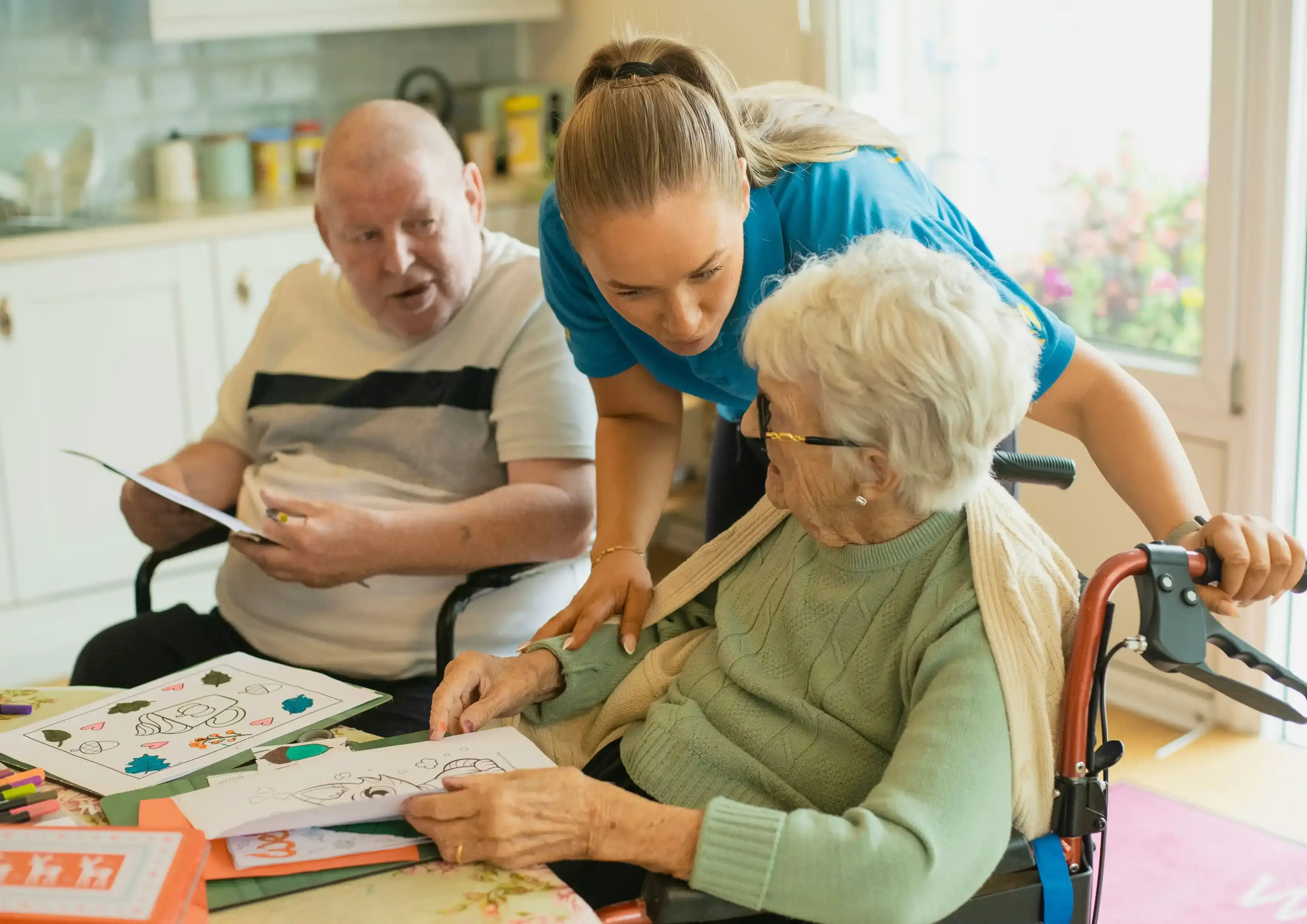
Reduced Mobility
Reduced mobility is linked with isolation, but it goes beyond your loved one’s social connections. This is because when mobility is reduced, your loved one’s ability to carry out even basic tasks is compromised, let alone activities that require prolonged movement or walking.
Reduced mobility can also impinge on hobbies, but, more dramatically, curb their ability to live completely independently and increases the risk of accidents from falls.
Thus, when mobility is reduced, especially if it is a sudden loss of mobility, it’s a strong signal that domiciliary care is needed.
We should also say that one of the great things about domiciliary care is that it means that your loved one can try to carry out a hobby like gardening even if there is an increased of a fall if they have a caregiver nearby to help them if something were to go wrong.
Deteriorating Health and Health Care Challenges
A change in your loved one’s health is another good indication that they need domiciliary care to help them.
This is particularly important if they have been managing a chronic condition since it is very important that medicine is taken consistently and correctly. However, if your loved one were suddenly be diagnosed with a serious health condition, it’s a good time to consider home-based care.
The rule of thumb here is that when a sudden change occurs, it’s sign that something is going on.
“But what if the change is slow?” you might ask. Simply, the important thing when your loved one’s health appears stable is to observe them so that you notice subtle changes. This includes listening carefully to them when they complain of things like memory loss or forgetfulness, ESPECIALLY if they keep commenting that they’ve forgotten their medication.

Increased challenges with Personal Care
Another important sign is when your loved one begins to struggle with personal care.
This one is actually quite easy to miss, especially because some of these challenges can be quite embarrassing (like struggling with toileting), but it can be noticed if you’re really paying attention.
Your loved one might mention that bathing or showering is becoming a challenge, or you might notice changes to their presentation.
In a man, you might notice that hair that was previously always neat is now often messy, or that shaving happens more infrequently with more cuts. In a woman, you might notice less jewellery, poorly applied makeup (or none at all, suddenly). Another tell-tale sign is a change in the clothes that they choose to wear.
Again, you are looking for changes.
Cognitive and Personality Changes
Finally, if you notice a gradual shift in attitude or personality, and you find that your loved one is becoming increasingly irritable or despondent, it could be a sign that something is going on. This can also manifest in the “spark” that makes them unique diminishing.
If you find yourself coming away from your loved one often thinking that they just weren’t quite themselves, it could be a sign that they need domiciliary care.
Of course, by itself this is inconclusive, but it’s still worth paying attention to.
Something that definitely needs to monitored is their general cognitive ability. If you notice a change there (especially if it is sudden), it’s usually a sign that something is happening. This is particularly true when it comes to the ability to think clearly, make decisions and remember things.
Of course, one’s cognitive abilities decline with advanced age, but if there is a pronounced change, that can be a sign that they need domiciliary care (as well as a visit to their health care professional.

Decreasing Peace of Mind
Funnily enough, your peace of mind around your loved one is a good indication that your loved one needs (or is close to needing) domiciliary care. If you find yourself often stressing about their well-being or constantly worrying about when the next accident or crisis is going to arise, that’s a good indication that they aren’t as independent as they should be and need a more formal support structure, both for their good and your good.
Similarly, if you notice that they are more anxious about being alone, or that they are finding more and more reasons to call you over (or another relative or friend), this can be a sign of decreasing confidence in their own ability to live independently. Again, the answer to restoring their confidence and independence, while looking after them can be domiciliary care.
What To Do When Your Loved One Needs Domiciliary Care
If you’ve noticed enough of these things and suspect that your loved one needs formal care and support from an expert caregiver, you want to start by doing some research and finding a shortlist of homecare providers ( we have a guide for that here).
Armed with that information, it’s time to have the conversation with your loved one about getting a caregiver.
Once they’re on board, all that’s left to do is to reach out to the domiciliary care company and start the process of getting care.
AS always, if you have any questions about home-based care, or have a loved one who needs care and you need advice, give us a shout – we’ll be happy to chat through things with you.
Frequently Asked Questions
1. What is the most important thing to look for in a home care provider?
There isn’t one “most important” thing, but if we had to pick one, we’d say that you should make sure that they’re registered with the Care Quality Commission (CQC), the regulator for the sector.
We have a “good” rating with the Care Quality Commission , which means that our service is performing well and meeting the expectations of the commission. We are also TDDI accredited with the CQC. TDDI stands for the Treatment of Disease, Disorder and Injury. You can find a fuller explanation of what this entails on the CQC website , but, in short, it refers to our caregivers’ ability to act quickly to provide fast medical interventions ASAP rather than having to stand by while they wait for emergency services to arrive.
2. What is the actual process of organising domiciliary care?
You reach out to us, and we’ll set up home visit and interview. In the interview, we get to know you and your loved one and discuss what is needed and wanted from the care. Together with your loved one, we then put together the care plan. Once everyone is satisfied, care begins!
3. What happens if the care plan isn’t working for my loved one?
All our care plans are supposed to be adaptable. If a plan isn’t working because some need or desire isn’t being met, or simply because your loved one’s heath situation has changed, we can change it.
The crucial thing is that you and your loved one talk to us if something isn’t working. However, our caregivers also monitor your loved one and will, themselves, suggest that adjustments be made if they notice that something isn’t working or that your loved one’s needs have changed.
4. Do you provide domiciliary care throughout the UK?
We provide domiciliary care over a large part of England, but not everywhere in the UK yet. Currently, we provide domiciliary care (including live-in care) in Bedfordshire, Gloucestershire, Hertfordshire, Northamptonshire and Oxfordshire.











.png)