A natural impulse after an elderly person falls is to rush to their assistance and try to help them up, but that’s not the best thing to do, and it can actually end up causing further harm to your loved one and injury to you.
So what should you do?
Well, that’s what we want to explore today so you’re prepared for the day your loved one falls and needs your help. To be forewarned is to be forearmed, as they say.
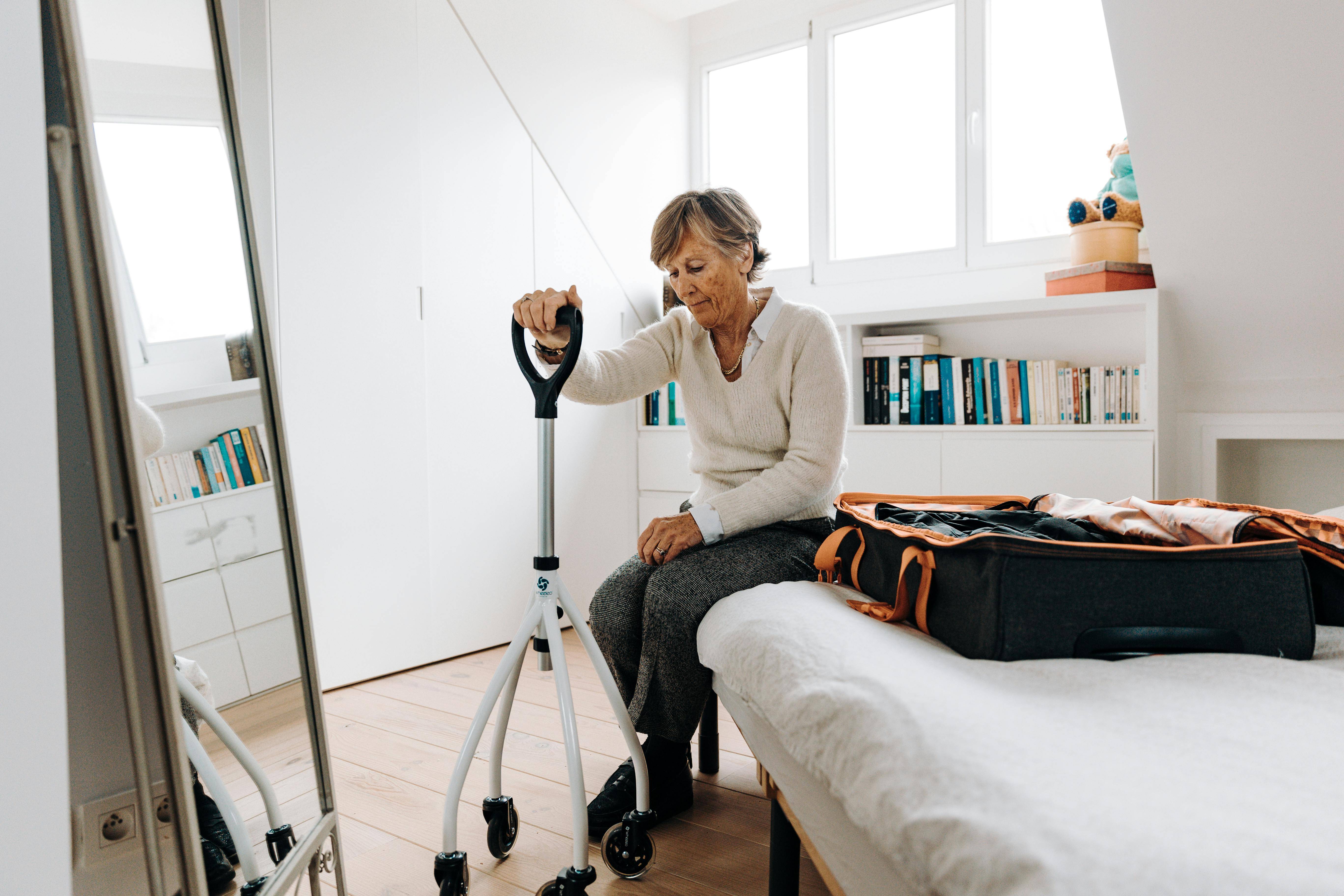
It is a terrible and traumatic thing to discover that your loved one has had a fall. In fact, it’s a genuine crisis situation that is liable to spike your pulse and cause a stress response. Unfortunately, very few of us are able to think coldly and rationally in that state, so the first thing anyone has to do in that situation is to chem themselves and actively calm themselves down.
While you may think there is no time to waste, that just isn’t true. Sometimes more haste means less speed, and reacting when you’re flustered or panicked can cause more harm than good.
Whether you think you’re calm or not, it’s a good idea to practice one or a couple of calming exercises:
Once you are calm and can think clearly, you’re in a position to help your loved one.
Important:

Check for:
If there is any sign of injury, or if you are concerned that there is a problem, call your loved one’s doctor and emergency services.
If your loved one has a serious injury, is in significant pain, or has injured their head, back, neck or hips, call 999 and then call their doctor.
If your loved one is unwell, in pain, or has a minor injury, call your loved one’s doctor or 111.
Remember:
While waiting for help to arrive, make your loved one warm and as comfortable as possible. Cover them with a blanket and get something soft for their head (but only if there is no suspected head or neck injury).
Do not give them anything to eat in case surgery is needed.
Ask them to move their body, arms and legs gently. They should also try to move every half an hour to prevent pressure sores.
Reassure them and speak to them in a calm, soft voice. Your loved one will be shaken and will likely feel out of control, fearful and embarrassed. Your reassurance – particularly that they are not causing you trouble – is an important part of keeping them calm while you wait.
Before guiding your loved one through the process of getting up, make sure that there are no dangerous objects like broke glass, shards of anything broken, or anything that could cause them to fall again.
Clear anything out of the way and make sure they have a clear space around them.
Observe your loved one closely as you move to the next steps, but do not try to lift them up.
If they show significant discomfort or pain, or you see a limb moving in an unnatural way, stop them from moving and call for help.
Talk to them and provide encouragement. You can provide light assistance and stability, but do not lift them up.
As we’ve said, sometimes adrenaline masks pain or injuries, so you need to keep a close eye on them as time passes. If you have any doubts, or your loved one starts to show signs of significant discomfort or signs of injury, call emergency services.
It’s possible that shock does not set in immediately and only starts to affect your loved one after they start sitting down.
Look out for:
There are other signs, but if you notice any of those, call 999, keep them warm, and seek medical advice.
You should always notify your loved one’s doctor after a fall, regardless of whether it results in injury or not.
The elderly – especially when there are other health factors at play – have an increased risk of falling and injury as a result of a fall. That is the unfortunate way of things.
However, you can mitigate this risk by spending time removing tripping hazards and furniture that crowds walkways. In addition, you can install caution tape on steps and grab handles in places like bathrooms.
Nighttime is also a high-risk time, especially when your loved one gets up in the night to go to the toilet. Installing night lights that provide dim lights, or installing motion sensors or smart switches that turn on lights when movement is detected is also a good way of helping prevent night falls.
It’s also a good idea to make sure that your loved one has a panic button that they keep with them at all times, as well as some panic buttons placed around the house so that if your loved one falls while alone, they can call for assistance.
Finally, it is worthwhile signing up for a falls response service with a specialist home care provider even if your loved one does not require home care since this sort of specialist service can provide fast onsite assistance and telephonic support while they’re on their way. It gives you a primary port of call if your loved one falls and can supply both of you with peace of mind because you can leave it up to them.
We’ve included a printable flow chart to guide you should anything happen to your loved one. It’s a good idea to print it and stick it to the fridge or some other easily accessible place in case of a fall. It’s a lot easier to follow a guide like this in a high-pressure situation.
There is no definitive answer to this, and it varies from person to person.
If there is no injury or harm done, there will be some soreness and stiffness, but it won’t impede their ability to get back on their feet, and the stiffness will fade with movement. However, it is likely that there will be a loss of confidence that can last a long time.
Minor injuries like bruising and sprains last longer and should take some weeks to heal. The severity of the injury affects recovery time.
Serious injuries like a broken bone or hip fracture can take months to heal, and it’s best to get your doctor’s advice on the recovery timeline. Recovery can vary greatly depending on the length of hospitalisation and on how much rehab the person can handle. Unfortunately, sometimes the person’s mobility is never fully restored after serious injury.
It is important that attention is given to rehab, especially if the person has to spend a lot of time in bed as part of recovery.
Stay calm and assess the situation.
If your loved one is injured, call for assistance immediately and contact your loved one’s physician. You can call 999 if your loved one has a serious injury, or 111 if it’s less severe.
If you loved one seems uninjured, guide them through the process of getting up to the point where they’re sitting on a chair or sofa.
Guide them to:
Once they’re sitting, assess whether they need help, contact their doctor anyway, and give them a blanket.
Treat the fall as serious, even if the bump seemed minor and contact your loved one’s doctor and emergency services.
If your loved one is losing consciousness, struggles to communicate, is confused, has a seizure or has any other serious side effect from the fall, call 999.
If the head injury is not serious, call 111 and your doctor.
Another option is to call a falls response service to ask for assistance and advice.
We offer support throughout Bedfordshire, Gloucestershire, Hertfordshire, Northamptonshire and Oxfordshire.
We're here to support you every step of the way. Whether you have questions about our services or need assistance in finding the right care for your loved one, our compassionate team is ready to help.
We understand that this journey can be challenging and we're committed to providing you with the information and support you need.











.png)