The decision between choosing live-in for your loved one or sending them to a care home is difficult, not the least because the advantages and disadvantages of each are not always fully appreciated. Care homes often seem the obvious choice. After all, they are professionally-staffed places specifically designed to house people who have significant care needs.
However, live-in care comes with benefits that can make it the better choice for your loved one.
But first, before we look at that, what live-in care entails, specifically.
Live-in care in the UK refers to having a professional caregiver live in your loved one’s home. The caregiver has their own room and provides direct care for a specified amount of time (e.g. 5-10 hours) every day that focuses around providing care when your loved one needs it most.
Outside of those times, the caregiver will be on hand for emergencies (e.g. at night for toileting or in the case of an accident like a fall).
The caregiver will normally be on duty for several weeks before being given a period off for respite during which time a respite carer will step in to complete the normal caregiver’s duties, after which the normal caregiver will return.
This type of care is different from the more intensive 24-hour live-in care, which involves a small team of carers who come to your loved one’s house to provide “hands-on” care around the clock. In this case, the team works in shifts so that someone is always there and no-one truly lives on site. Rather, your loved one’s team rotates in and out.
There are many advantages to homes-based live-in care that you simply cannot get through any other type of care.
As you might have gathered from our explanation of live-in and 24-hour live-in care, one of the chief benefits is unrivalled personalisation. Simply put, there is just no way to get the same level of focused, individual attention in a care home.
Your loved one will have a caregiver who truly gets to know your loved one on a personal basis, not only providing care, but also giving your loved one a dependable companion.
The much-valued companionship aside, because the caregiver does not have to worry about looking after a number of other people, your loved one can get the heightened level of care that one-on-one care provides.
This means that care can be flexible and personalised to your loved one’s situation and preferences that isn’t possible in a care home. In addition, it means that it’s far less likely that something falls through the cracks or that a subtle (but serious) change in your loved one’s condition is missed.
That’s not to say that care homes provide a poor level of care. Care homes do wonderful work, and there are cases in which it might be the only option, but the fact that each caregiver has to oversee a number of inhabitants of the care home means that there is the greater potential for things to slip through the cracks or care to be rushed on occasion.
The one-on-one focus that home-based live-in care brings means that care doesn’t have to be rushed, a real relationship can form between your loved one and their caregiver and that the care plan can be personalised to fit your loved one’s needs and desires.
On that final point, an example of the extent to which live-ion care can be customised involves meals. Some people love to cook; others hate it; still others don’t have the ability to cook anymore. A live-in carer (if it is needed) could step in to assist with cooking for your loved one. Alternatively, if your loved one lives to cook and bake (we know some people like this!), the caregiver can be on hand to ensure that an accident doesn’t happen while giving your loved one the freedom to cook for themselves.
It all depends on what is needed and agreed upon, but it shows the level of personalisation that is available.
On that note, the flexibility and ability to customise care plans brings a far greater level of independence for your loved one.
Of course, this is going to depend on their overall condition and what they are capable of doing or not doing, but live-in care, because it is based at home and because of the one-on-one nature of the care allows far greater freedom than a care home because it’s not necessary to implement rules to manage large number of people.
What independence means practically will differ from person to person (because home-based care is truly personalised), so we cannot say what it will look like for each person. However, we can say that this sort of independence is incredibly beneficial for your loved one’s well-being.
It contributes to their sense of self-worth and dignity and helps their life remain meaningful because it provides them with a greater level of freedom that is so important to the human spirit.
We all know the frustration that comes with being constrained or feeling trapped. Well, being trapped in a system that you feel you have no control over can be detrimental to your well-being. This is true whether we are talking about the ability to do things that we want to do, or whether we feel like that we have the ability to shape our lives.
With live-in care, your loved one has the ability to shape their own routine, rather than conform to the routine of a system. This is particularly powerful when their overall health is on the decline, and the freedom that live-in care gives to individuals to set their own routines (or, maintain their life-long routines) is super empowering.
This extends to another significant advantage of live-in care, namely granting your loved one the comfort of continuing to live in the home they’ve spent so much time in.
The adage “there’s no place like home” is certainly true, and the connection we feel for our homes is powerful. Live in care allows those familiar comforts and sense of “rootedness” that come with home to continue. The alternative is to turn their life upside down and wrench ties and the comforting sense of the familiar.
There are so many ways that this manifests itself, but one of the most important ones we observe is the connection to memories. Our caregivers can tell you stories of how people receiving live-in care can point to places in their homes where important events took place. Whether it’s the dining room table where they shared a meal with their son after he returned from active service for the first time, to the first time their daughter walked through the door with their granddaughter, powerful memories abide in the home, reminding them of good times.
In addition to this, your loved one can maintain a connection with any pets that they might have. Not everyone feels powerful connections with animals, but for those who do, having to give up a pet when they move to a care home is another powerful force of destruction.
One aspect of home-based care that is often misunderstood is that of privacy. People often think that their loved ones will feel that their privacy is being invaded by a caregiver, but this isn’t the case for two reasons:
Firstly, your loved one plays the role of host, inviting the outsider into their lives. And while this new caregiver does come into your loved-one’s space, they integrate into your loved one’s life to provide care and companionship, fitting into the shape of your loved one’s life.
This is intrusive, it is true, but your loved one is able to set their own boundaries within the home. This is not true in care homes.
Second, privacy is greatly reduced in care homes. Your loved one is constrained to a much smaller area and have to accept communal living areas. They don’t just have to worry about caregivers coming into their spaces during times dictated to them, but they constantly have to rub shoulders with other people and don’t have the freedom to get out and about in their own space without strangers constantly around them.
This is sometimes endorsed as a positive – it means that there are always people around to socialise with, but these are people imposed upon your loved one without their choice. It doesn’t work for everyone.
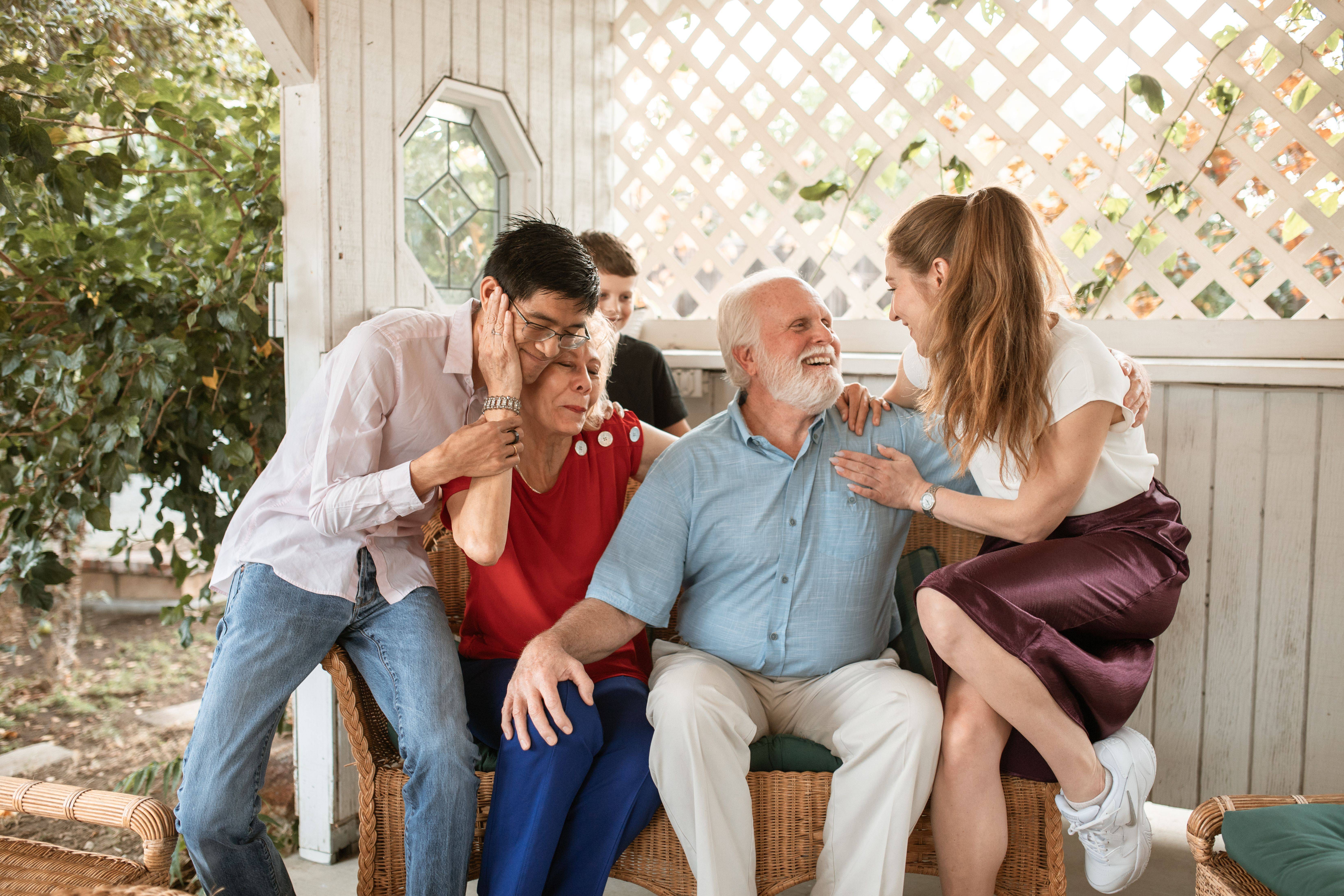
There are no visiting hours for live-in care. Your loved one’s family and friends can be immersed in their lives to the extent that your loved one wants.
You don’t have to worry fitting visits in around quiet hours or mealtimes. If you want to visit for lunch, you simply come. If you want to take your loved one out, you take them out. You don’t have to worry about an institution’s structures or about getting permission to leave.
Similarly, if your loved one wants to go to a friend’s birthday and they’re healthy enough, your loved one’s caregiver might even be able to facilitate this. Alternatively, if your loved one wants to host a group of friends, there are no logistical challenges to worry about.
It’s freeing and good for your well-being.
Another thing that’s good for your well-being is the relative lack of disruption to your loved one’s life. Apart from routines and the general shape of life, the fact that live-in care stops them from having to move is particularly important. Moving disrupts. It’s traumatic even.
Not having to move stops this from being an issue.
People often think that live-in care is too expensive to be affordable, and that’s a major concern in this economy.
However, we’ve shown that live-in care can be significantly cheaper when couples are involved and are often comparatively priced to care homes. In addition, the value that live-in care provides in the UK often makes it cheaper when you take all factors into account.
When you put this together, it’s a compelling set of reasons to choose home-based, live-in care over care homes. In our opinion, home care in the UK is the best way to go for most people.
Of course, you will need to do your investigation if you’re looking for care options for your loved one, but chances are home-based care will tick all the boxes.
If you are investigating your options, why not get hold of us? We can talk through your situation and provide more insights.
It’s surprisingly simple, and our carers might even suggest changes to you and your loved one.
Our care plans are designed to be flexible and adaptable. They place your loved one at the forefront of everything, so if something needs to change because it isn’t working or because the situation has changed, we adapt. It’s as straightforward as that.
After you get hold of us, we visit your loved one so we can see your loved one in their home and get a sense of their space and needs so we can go into the interview with you and your loved one as informed as possible.
The plan itself is formed through an open dialogue with you and your loved one. It doesn’t have to be fully formed after a single meeting, and time can be taken to think it over. Once everyone is happy that it fits your and your loved one’s needs, we get to it!
Yes. We know that some people are cared for by unpaid carers like family members. We also know that respite is needed and that sometimes you might need to go away on holiday (or for any number of reasons) but feel unable to do so because your loved one needs care. We can provide live-in respite care while you’re away or unable to fulfil your care duties.
It goes without saying, however, that we would need to talk with each other to determine whether it fits your situation. But get hold of us, and we will see what we can do to provide the respite you need, and the care your loved one needs.
We operate in the UK and offer support throughout Bedfordshire, Gloucestershire, Hertfordshire, Northamptonshire and Oxfordshire.
We're here to support you every step of the way. Whether you have questions about our services or need assistance in finding the right care for your loved one, our compassionate team is ready to help.
We understand that this journey can be challenging and we're committed to providing you with the information and support you need.









.png)