Amidst all the uncertainty of a loved one’s care journey, one thing is sure: their care needs will change with time, and that means that their care plan will need to change with it. These changes can (and often do) creep up on you and your loved one seemingly without warning, and take you by surprise, so if you have a loved one who has started receiving care (or is about to), it is a good idea for you to be given insight into what to expect and what to look out for.
Afterall, to be forewarned is to be forearmed, as they say.
Home Care in the Early Stages
The early stages of care can be as simple as an hour or two for a quick checkup and a chat, with the caregiver making sure that your loved one’s medication is being taken properly and making sure that there has been no sudden change to their health condition.
Apart from a quick check in and the monitoring of your loved one, your loved one might get help with shopping, some light housekeeping and meal prep, not to mention some vital companionship.
The support will vary greatly, depending on your loved one’s condition and their care needs and desires for life.
One thing that is incredibly important in these early stages, is to do ensure that your loved one enjoys as much agency and independence as possible. They can carry on with life almost as normal, getting out when they can, pursuing hobbies, hosting friends and family, and generally making the most of probably the biggest advantage of domiciliary care, enjoying their home and the freedom that comes with it.

Home Care in the Middle Stage
As time goes on, however, your loved one’s needs will change, and the care plan will need to adapt with them.
This change is going to look different depending on what condition they are facing, so it is impossible to predict how these changes will progress. But there are some general things you can look out for.
More often than not, the changes will be gradual which makes noticing the changes difficult, especially if you spend a lot of time with your loved one. However, you can look for changes in their ability to carry out normal tasks, cognitive changes, decline in memory and gradual difficulty with getting out and about.

It’s also worth revisiting the topic often, with your loved one’s caregiver, their healthcare specialist and your loved one. If the conversation is ongoing and open, the care plan will adapt over time.
Still, you will also need to adapt to the changes in your loved one and their changing needs.
What you’ll typically see in the middle stages is a gradual decline in your loved one’s health, though their health might appear completely stable for a long time.
Practically, the frequency of the visits from the caregiver will increase, and they will start to pick up more duties to help your loved one. At the same time, the visits tend to get longer to enable the caregiver to complete the supporting tasks they need to carry out.
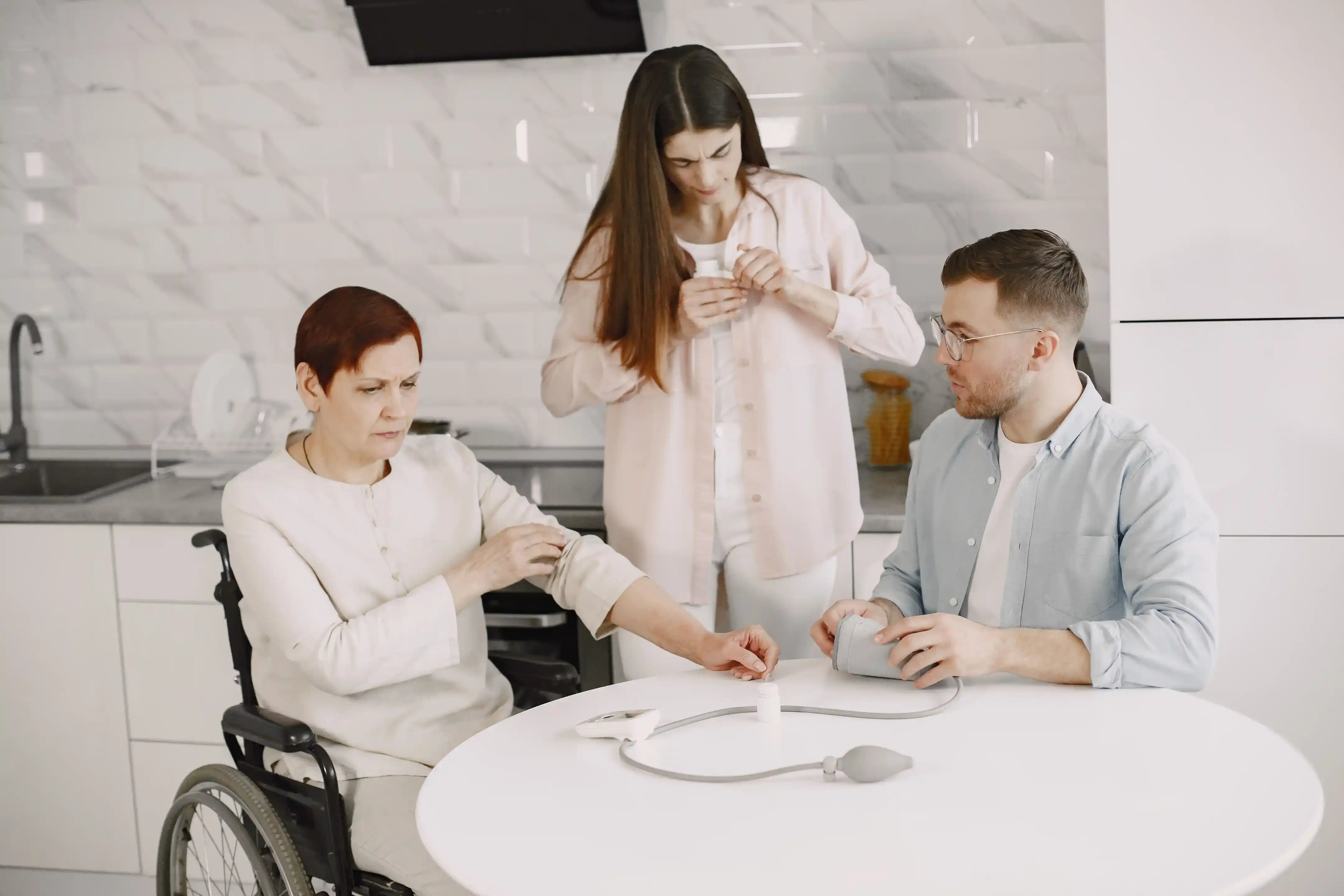
Again, what the care will look like specifically is impossible to predict because everyone’s situation is unique, but meal preparation, light household tasks, transport support, more overt medication management and even some personal care support can start to come in during the middle period.
People sometimes worry that this will get in the way of any visits you have your loved one and their social life, and that the freedom of the person receiving care will be stripped from them.
However, this is not the case. By the time your loved one gets to this position, you will be used to their involvement and so will your loved one. Furthermore, the point of this care is to give your loved one the chance to enjoy life and live a life that wouldn’t be possible in a care home.

Full-time Home Care
However, at some point, your loved one could need so much care that even several hours a day is insufficient and they need round the clock or live-in care.
This change typically comes about because your loved one can no longer bathe, dress or engage in personal care unassisted. The risk of a fall is also greatly increased, and a caregiver needs to be on hand to respond to an emergency or help them move around.

In this situation, even if your loved one is living with a more able spouse, that spouse will need help to meet the needs of your loved one. Thus, the caregiver is as much of a help to the healthier partner as they are support to your loved one.
During this period, the caregiver will provide companionship since your loved one will struggle to get around, as well as help with household chores and meal preparation.
More than that, the caregiver will provide support during normal routines, and support during the nighttime, particularly with toileting since falls and accidents are especially risky and common for a person with significant care needs.
It’s a good idea to use a care company that is nurse-led and has caregivers who can deliver complex care and are TDDI-certified so that they can respond with treatment in the case of an emergency and provide the level of expertise needed to care for someone with specific care.
We say this because the shape of support on a daily level will follow the particular health condition your loved one has. The care and support that a person needing cancer care, for example, will have important differences in comparison with someone who has a stoma.
In this way, domiciliary care must be truly individualised.
Why Domiciliary Care
You might think that at the point of 24-hour care, a care home is the best choice. Of course, it is a viable option and one that works for some people, but the advantages of home-based care are significant.
For one thing, by the time the final stages are entered, your loved one will have developed a relationship and understanding with the caregiver and having the care package slowly shift with your loved one’s condition is far less traumatic and disruptive than moving into a care home.
In addition, there is the certainty of being able to continue living with their partner, enjoying any pets that your loved one may have, and the not inconsequential advantage of staying in a space that they’ve occupied for so long, with all the memories that inhabit the walls.
As they say, there’s no place like home.
And as for home-based care and what it looks like in each stage, you could say that it looks like home.
Frequently Asked Questions
1. What is TDDI-certified?
TDDI stands for the Treatment of Disease, Disorder and Injury. You can find a fuller explanation of what this entails on the CQC website, but, in short, it refers to our caregivers’ ability to provide fast medical interventions ASAP rather than having to stand by while they wait for emergency services to arrive.
And if you’re wondering, we have a “good” rating with the Care Quality Commission, which means that our service is performing well and meeting the expectations of the commission.
2. How do I organise domiciliary care?
You give us a call, and we talk through the situation with you. After that, we set up a home visit, form the plan and care begins.
We recommend you talk to your loved one’s health care provider and your loved one first though, and you might also want to look at some funding option (though you can also talk to us about that for some guidance).
3. How flexible are care plans?
Our caregivers are always monitoring your loved one’s health state, and we have regular review sessions to determine what (if anything) needs to change. But the short answer is that they are very flexible; they are designed to change.
4. Do you provide home-based care near me?
If you live in Bedfordshire, Gloucestershire, Hertfordshire, Northamptonshire and Oxfordshire, we would be more than happy to provide your loved one with the compassionate and flexible care they need.
How Can We
Best Serve You?
We're here to support you every step of the
way. Whether you have questions about
our services or need assistance in finding
the right care for your loved one, our
compassionate team is ready to help.
We understand that this journey can be
challenging and we're committed to
providing you with the information and
support you need.













.png)